

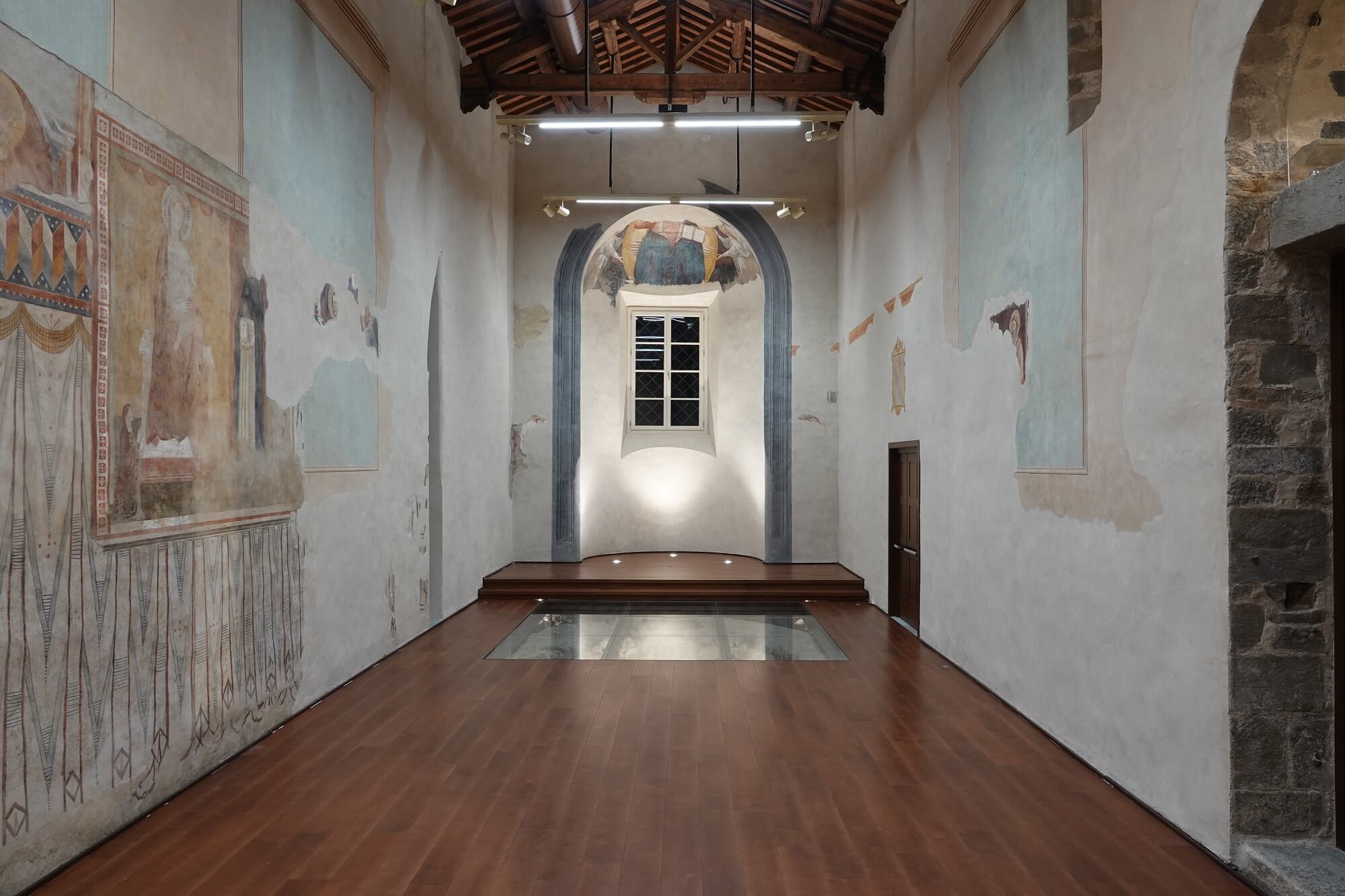
Church of San Jacopo in Castellare
Pistoia
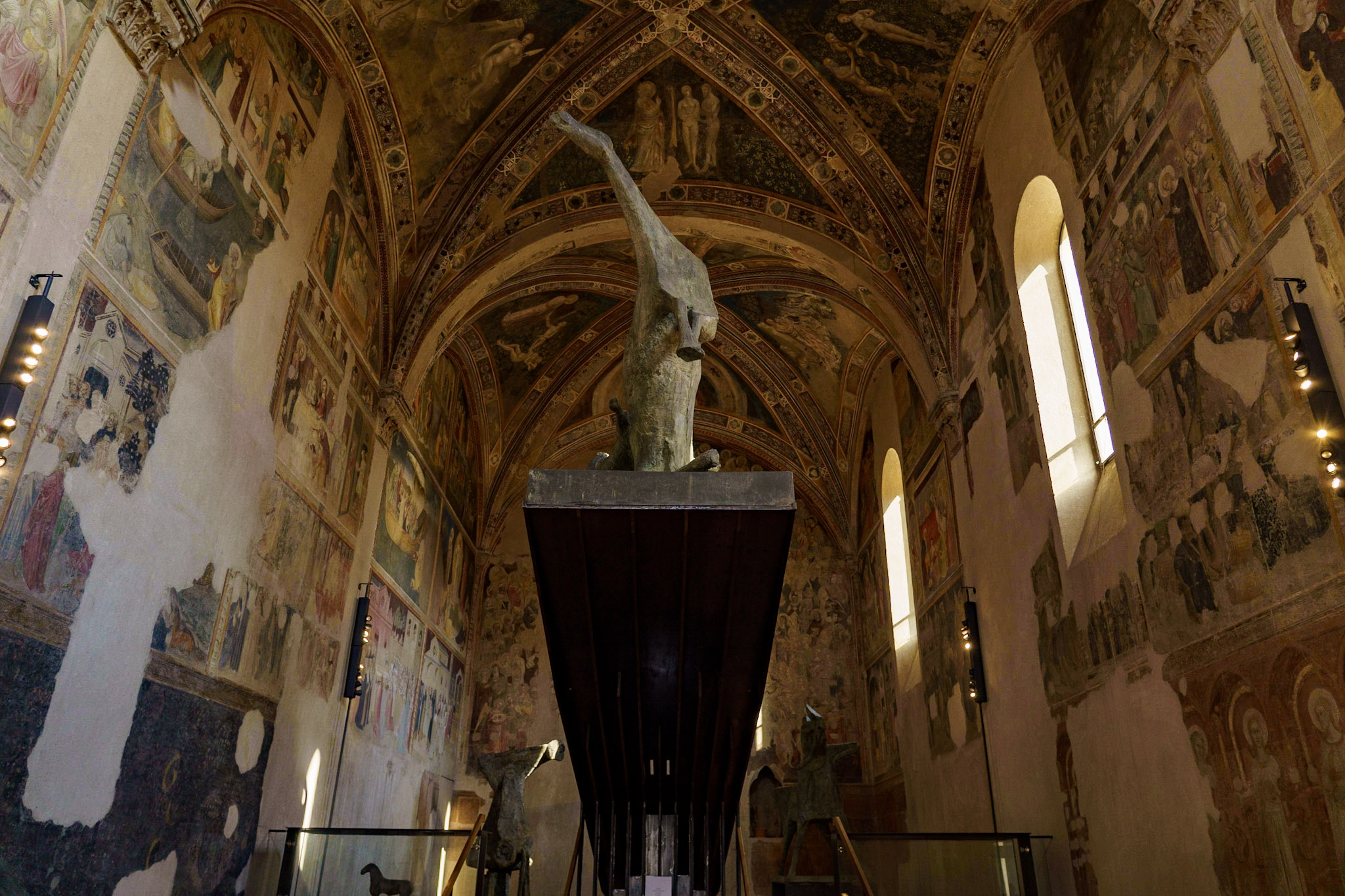
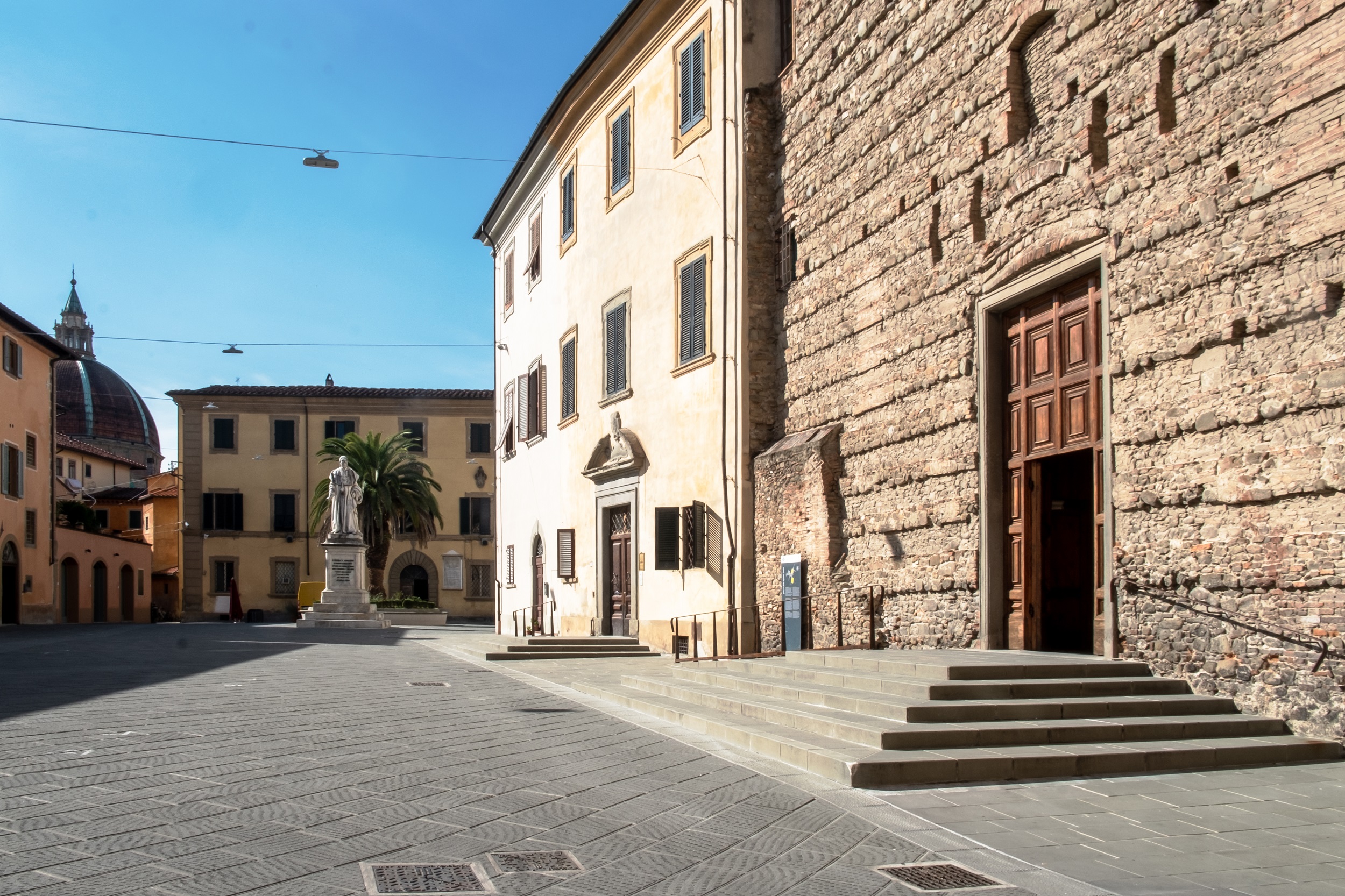
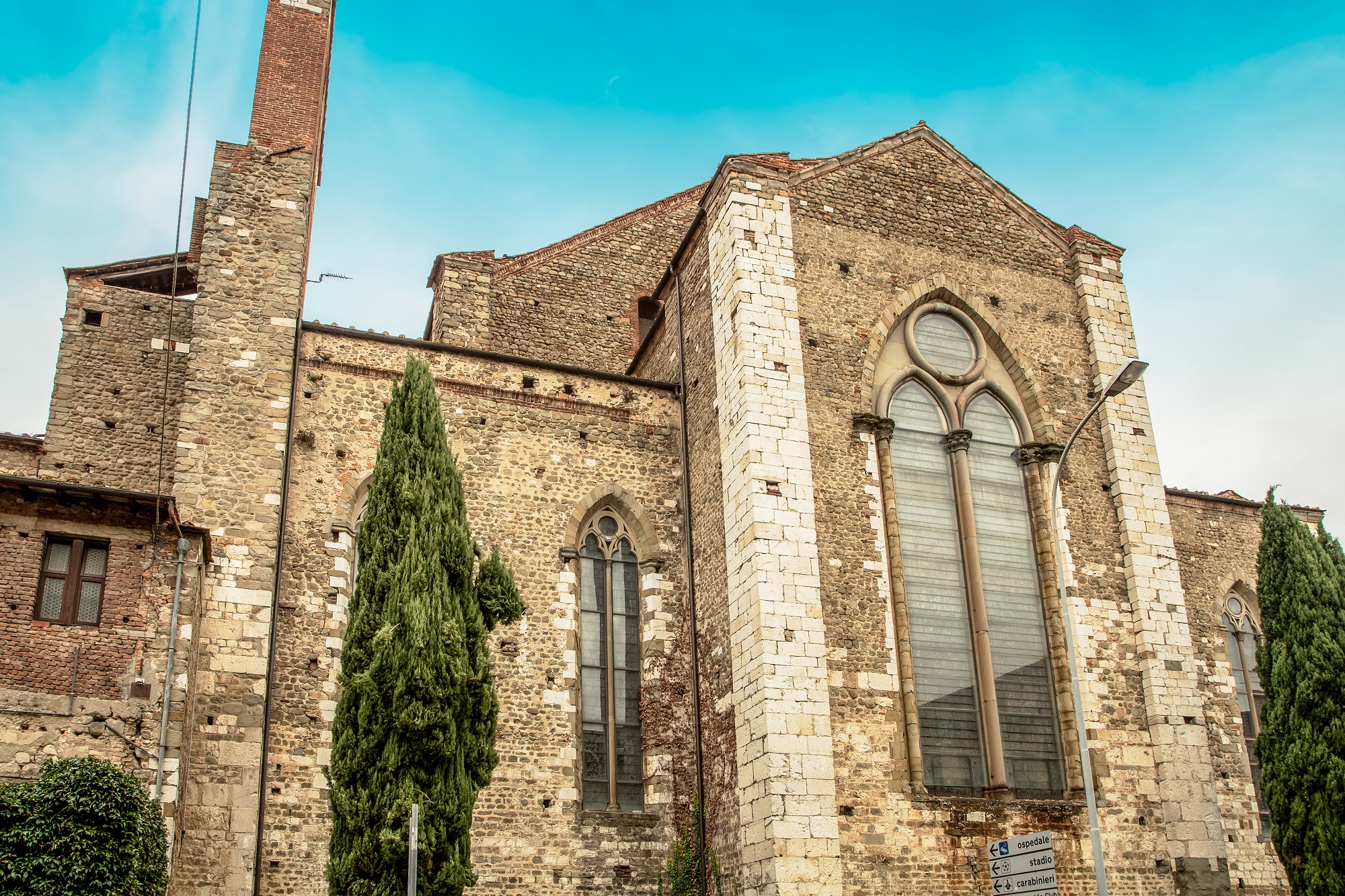
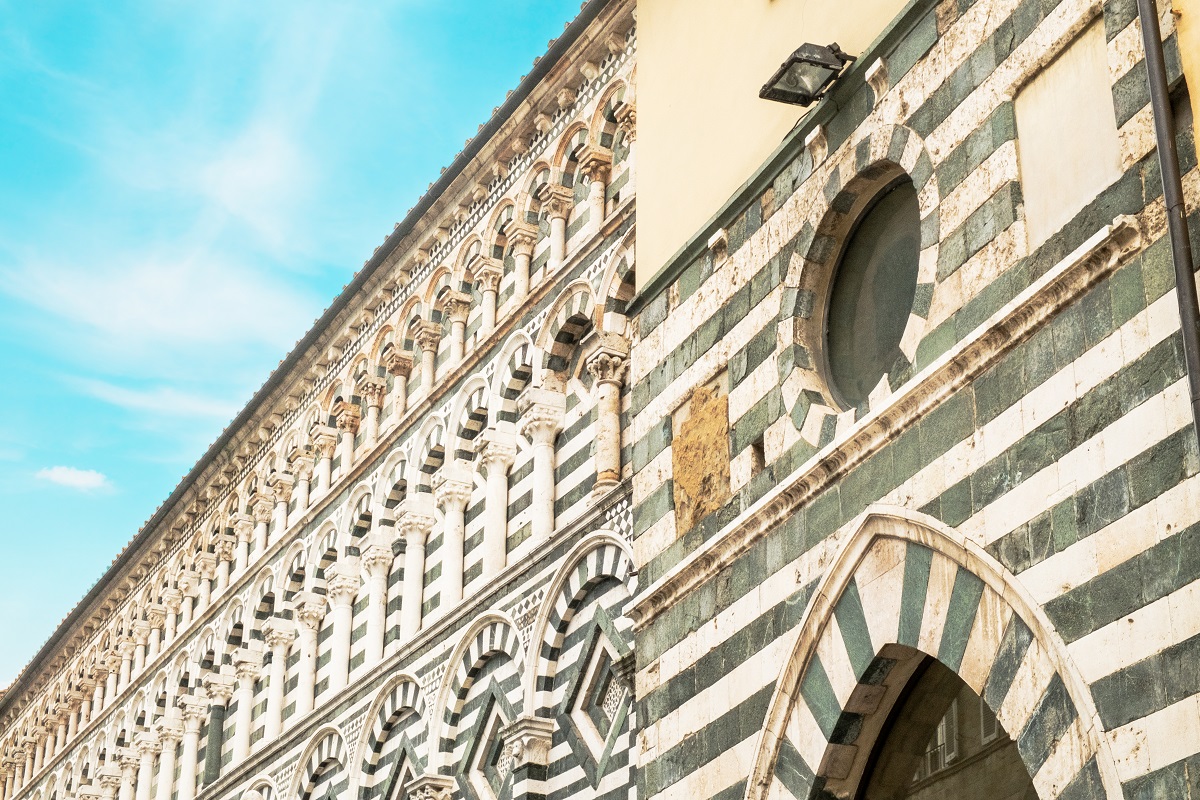
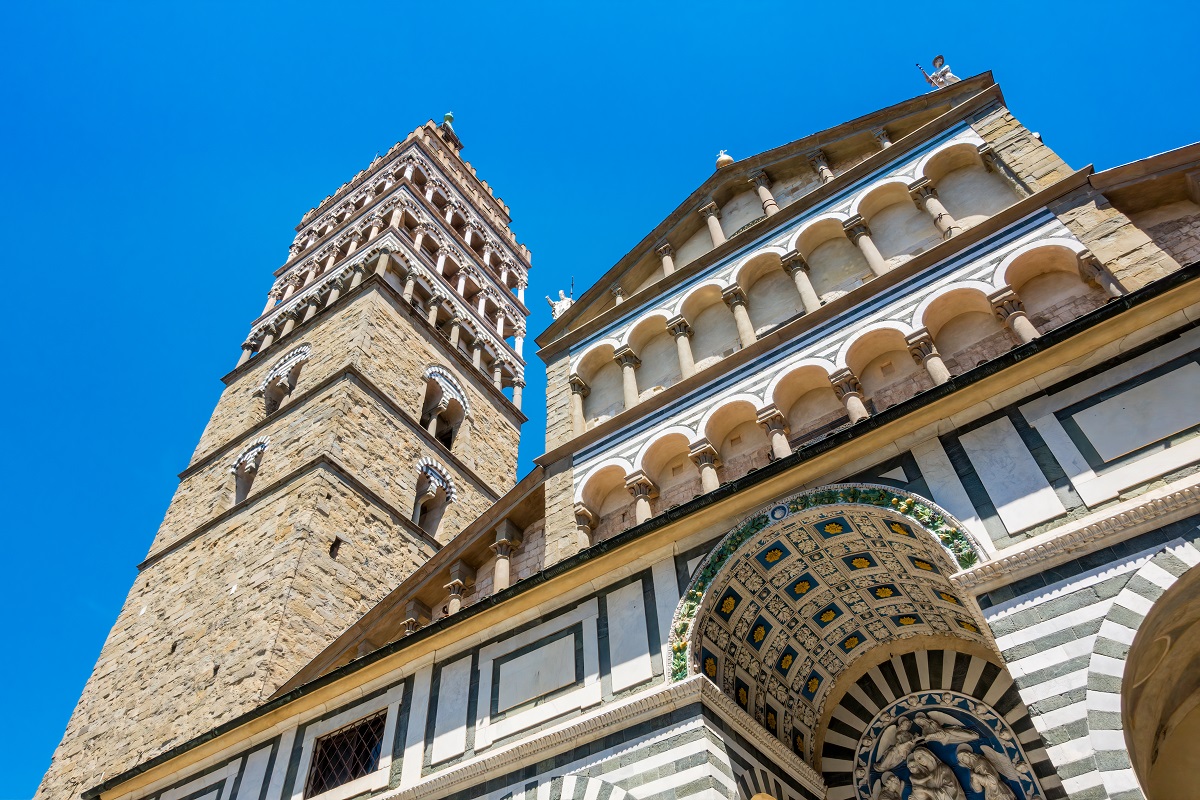
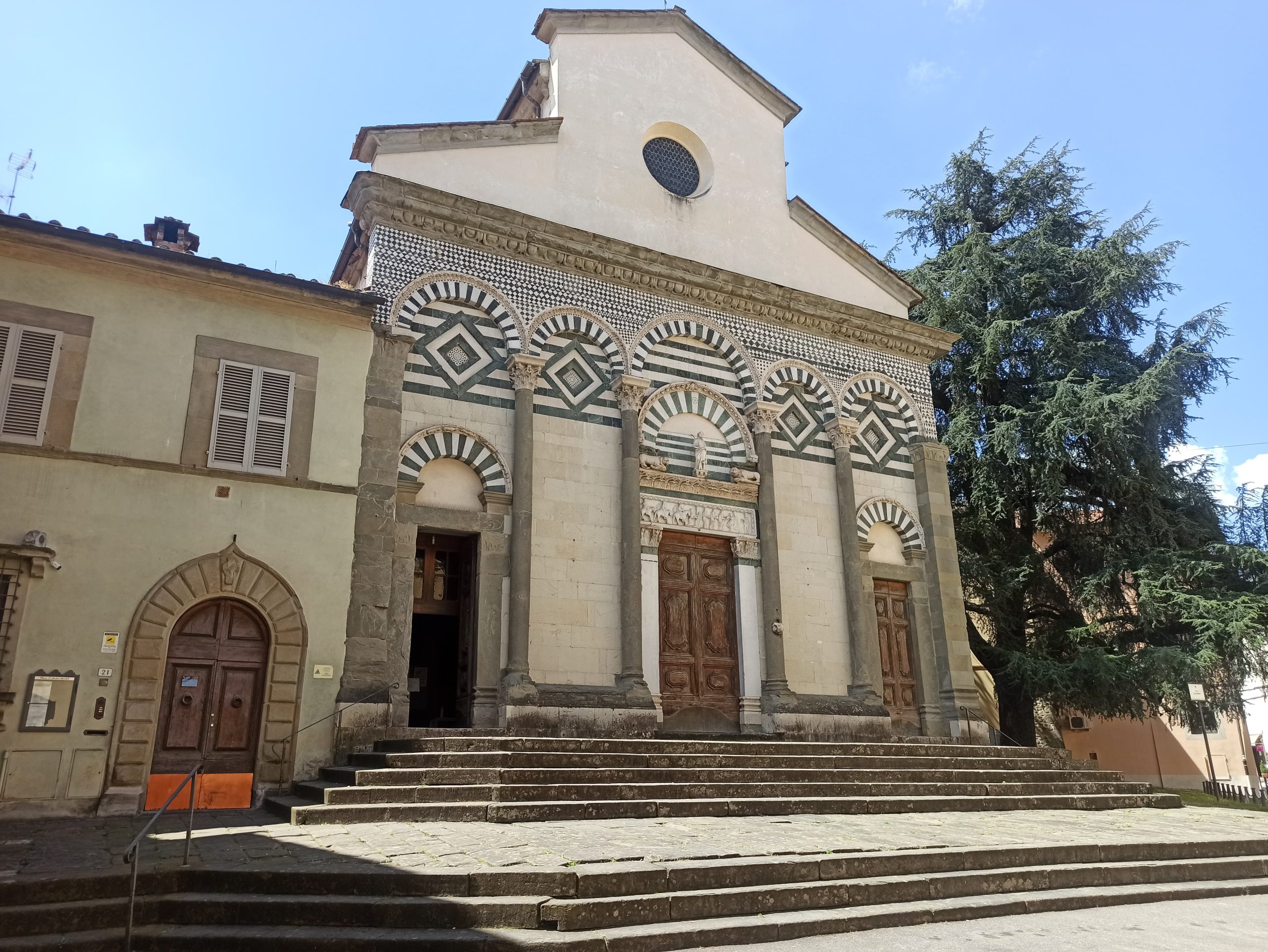
The church is one of the oldest in Pistoia, and the frescoes it preserves allow visitors to admire the evolution of local painting between the 13th and 14th centuries.
Located in the heart of the historic center, San Jacopo in Castellare is one of the oldest churches in Pistoia, and although it was first documented in 1131, it likely existed already in the early medieval period. The building stands adjacent to the first city walls in the area known as “castellare” due to the presence of military fortifications dating back to the 10th century, from which it derives its…
Pistoia
Discover The church is dedicated to Sant’Antonio Abate who is usually depicted holding a T (tau)-shaped walking stick and a little pig at his feet.
The convent and church of Sant’Antonio Abate or of the Tau (from the Greek letter T: made in blue enamel which believers used to wear sown into their tunics or cloaks, bringing to mind the top of the stick which the saint often leant on), was founded in the middle of the 14th century by the friar Fra Giovanni Guidotti in the parish of San Giovanni Fuorcivitas in Pistoia. The church…
Pistoia
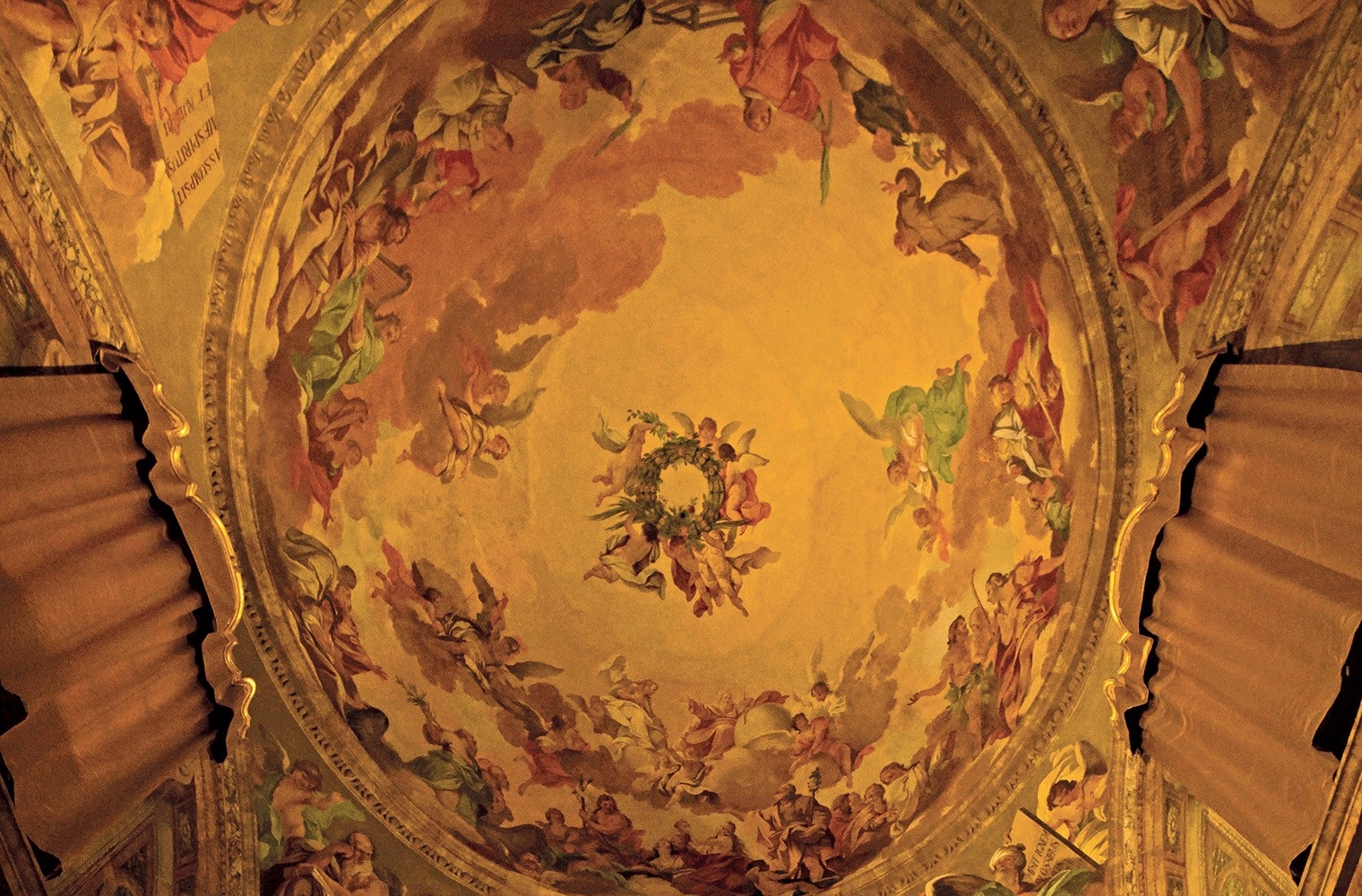
Discover A true jewel of 18th century Pistoia art, brought back to its original glory by a recent restoration. It now holds temporary exhibitions.
The Church of San Leone goes back to the 14th century, but it is mainly thanks to alterations made in the 18th century, by the Pistoia architect, Raffaello Ulivi, that it has become one of the most important buildings of 18th century art and architecture in Pistoia. The walls, ceiling, and the domed apse are covered with pictorial decorations realized by the most important artists of 18th century culture, such…
Pistoia
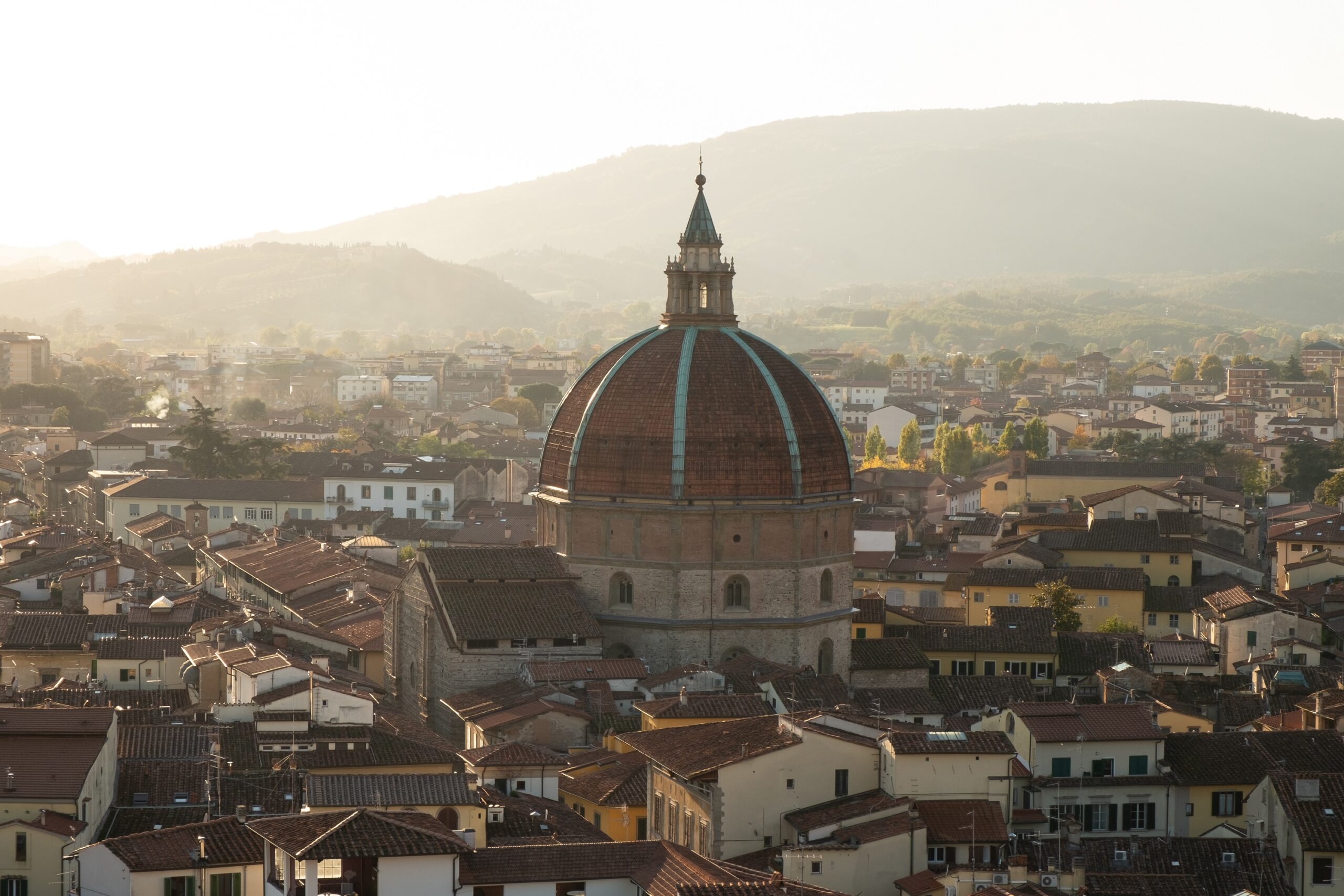
Discover Its imposing dome, designed by Giorgio Vasari, went on to become one of the Pistoia’s most prominent symbols.
Work upon the Basilica della Madonna dell'Umiltà began in 1495 and was completed in 1568. It included the intervention of Giorgio Vasari, who designed its imposing dome, which went on to become one of the city’s most prominent architectural and religious symbols. It was built in honour of the image of the Madonna and Child from the ancient church of Santa Maria Forisportam, which is said to have exuded a…
Pistoia
Discover The church houses the high altar, designed by Gian Lorenzo Bernini, and the great altarpiece, by Pietro Berrettini da Cortona, depicting the Apparizione di Cristo a Sant’Ignazio.
While the construction of the Jesuit College began in 1641, and work on the Church of Sant’Ignazio di Loyola began in 1647, the latter was subsequently consecrated to the Spirito Santo in 1774 and represented a “new” building for Pistoia with respect to other works that were being carried out on buildings of medieval origins. The large hall contains Roman Baroque decorative elements. Lodovico Gemignani, one of the artists who…
Pistoia
Discover The monasterial complex of the Church of San Francesco is a wonderful work of architecture dating back to the 13th century.
Until Sunday, September 22, open only in the morning. During the mid-13th century, the Friars Minor settled in the Church of Santa Maria al Prato. The current complex is the result of expansion work, which began in 1289 and lasted up until the early years of the 18th century. Inside, the great nave boasts an imposing Tuscan style wooden ceiling, which is reminiscent of the great Florentine churches. Among the…
Pistoia
Discover The church was originally built outside the town walls, hence the name Fuorcivitas, meaning “outside the city”.
The church of San Giovanni fuorcivitas assumed its present aspect between the 12th and 14th centuries. The structure’s white and green façade represents one of the greatest achievements of Pistoia’s Romanesque architectural heritage. Inside, the church boasts a magnificent pulpit by Fra Guglielmo da Pisa (1270), as well as a glazed earthenware depiction of the Visitation, which is attributed to the work of Luca Della Robbia. Info Pistoia Sacra info@pistoiasacra.it…
Pistoia
Discover The Cathedral houses the silver altar, one of the most prominent works of Italian and European Gothic goldsmithery, and a relic of Saint James.
The Saint Zeno Cathedral is one of the buildings which embellish the Piazza del Duomo. The first time we hear about its existence is in 923 A.D. Its present-day aspect is the result of various modifications that have taken place over the years during the 12th, 14th, and 15th centuries. At the end of the 16th century, its gallery was modified to become what we can see today. Inside the…
Pistoia
Discover The church features a magnificent pulpit, with white marble reliefs and porphyry columns, and two painted wooden crucifixes, which are attributed to the work of Giovanni Pisano.
While its foundation dates back to the 8th century, the Church of Sant'Andrea owes its current appearance to the work carried out between the 12th and 13th-centuries. The façade is likely the work of Gruamonte and Adeodato, as is the architrave dating back to 1166, which boasts a depiction of the biblical Three Kings, the first pilgrims in Christian history. Inside, the church features a magnificent pulpit and two painted…
Pistoia
Discover