

The former San Desiderio oratory was originally a church for a convent of Benedictine nuns, dating back to 1084. In 1440, Pope Eugenio IV suppressed the convent, and it was then converted into a hospital designed to aid pilgrims and wayfarers.
In 1516, the building went back to being a convent, this time for Franciscan nuns, until it was again suppressed, this time by Grand Duke Pietro Leopoldo and by the Bishop of Pistoia, Scipione de’ Ricci (1780- 91).
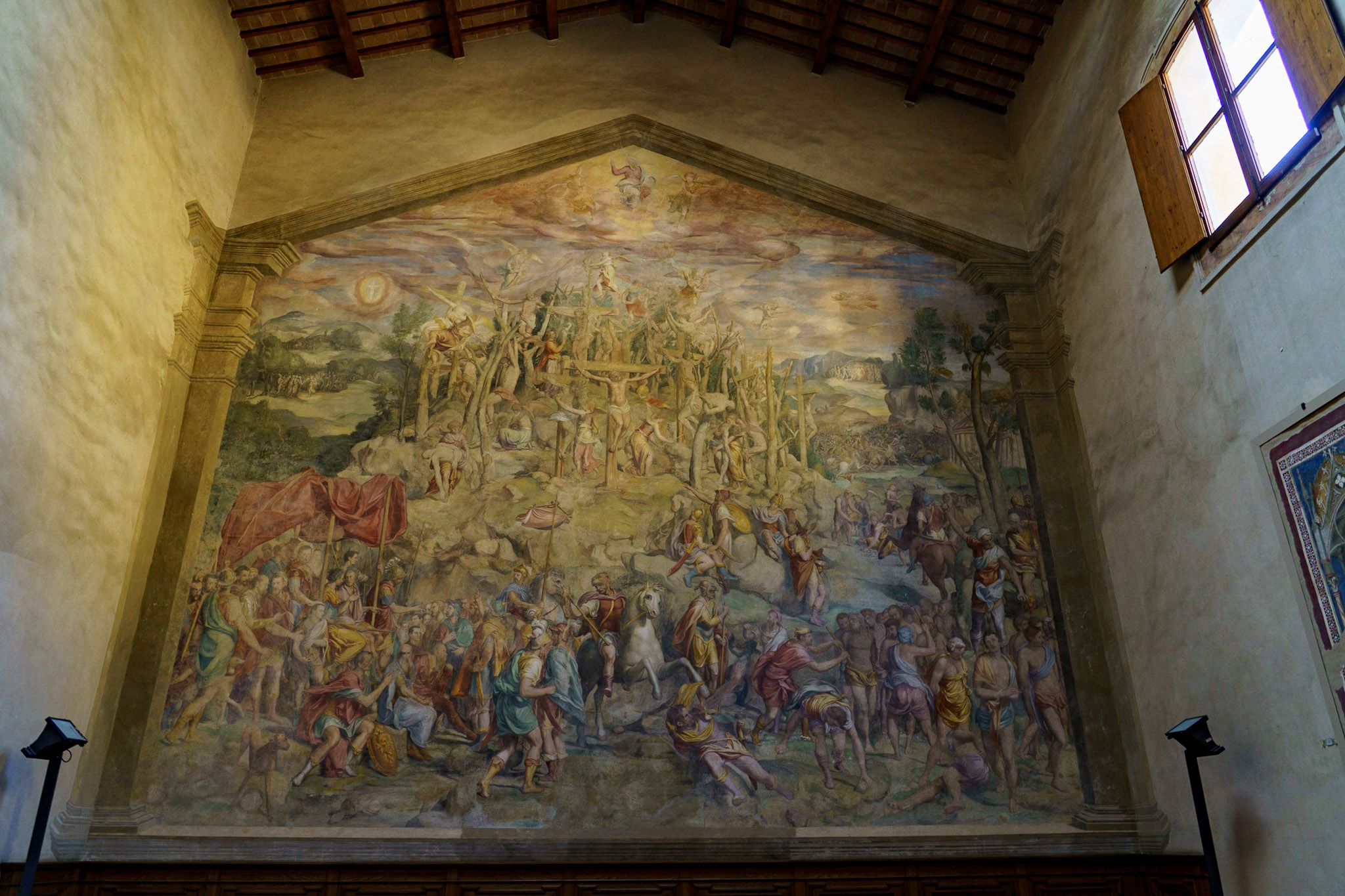 It is a bare, rectangular prayer hall with a gabled roof with a 16th century fresco by Sebastiano Vini. On its north wall, there is a portico with round arches lying over stone Tuscan columns.
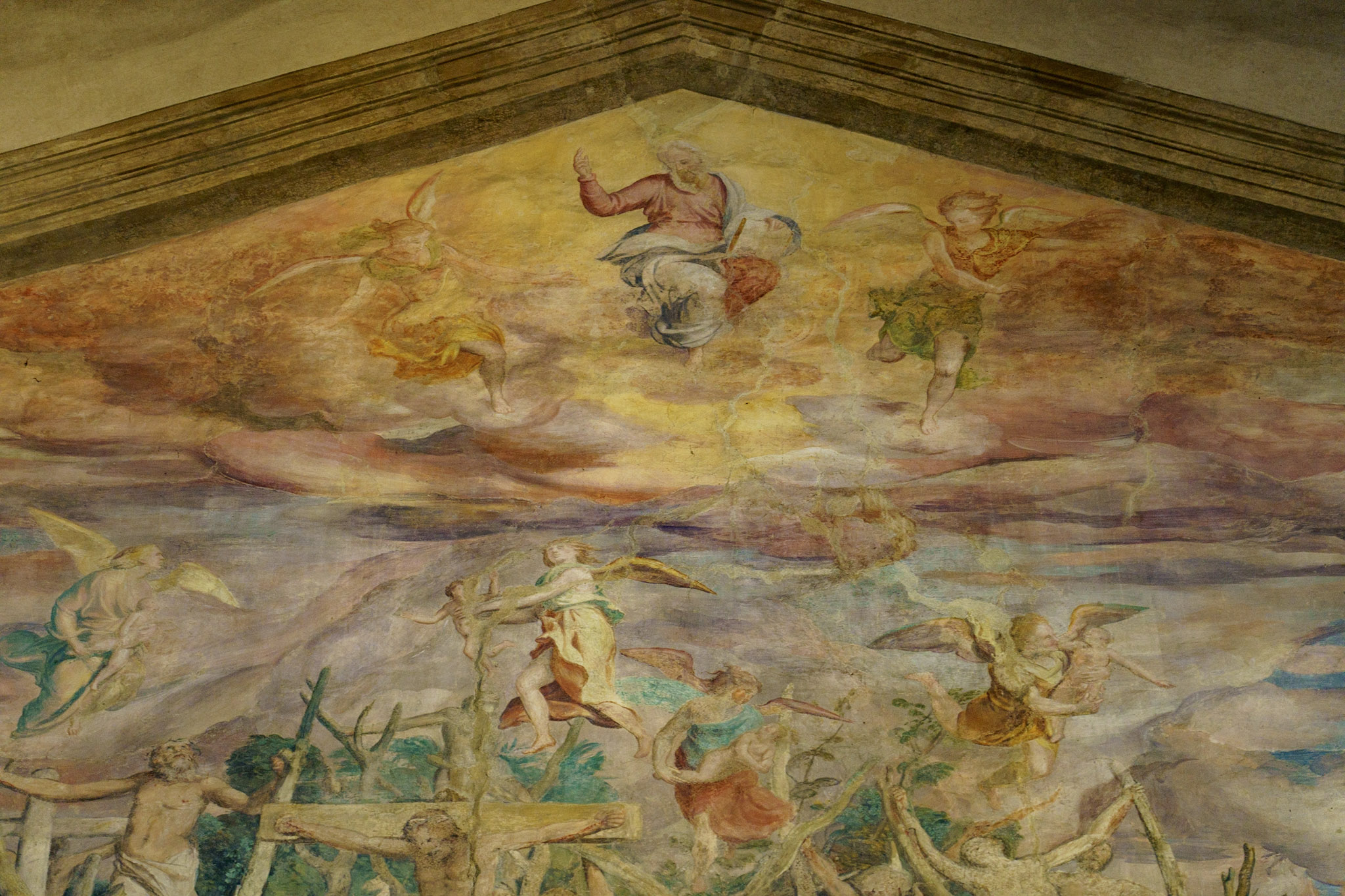
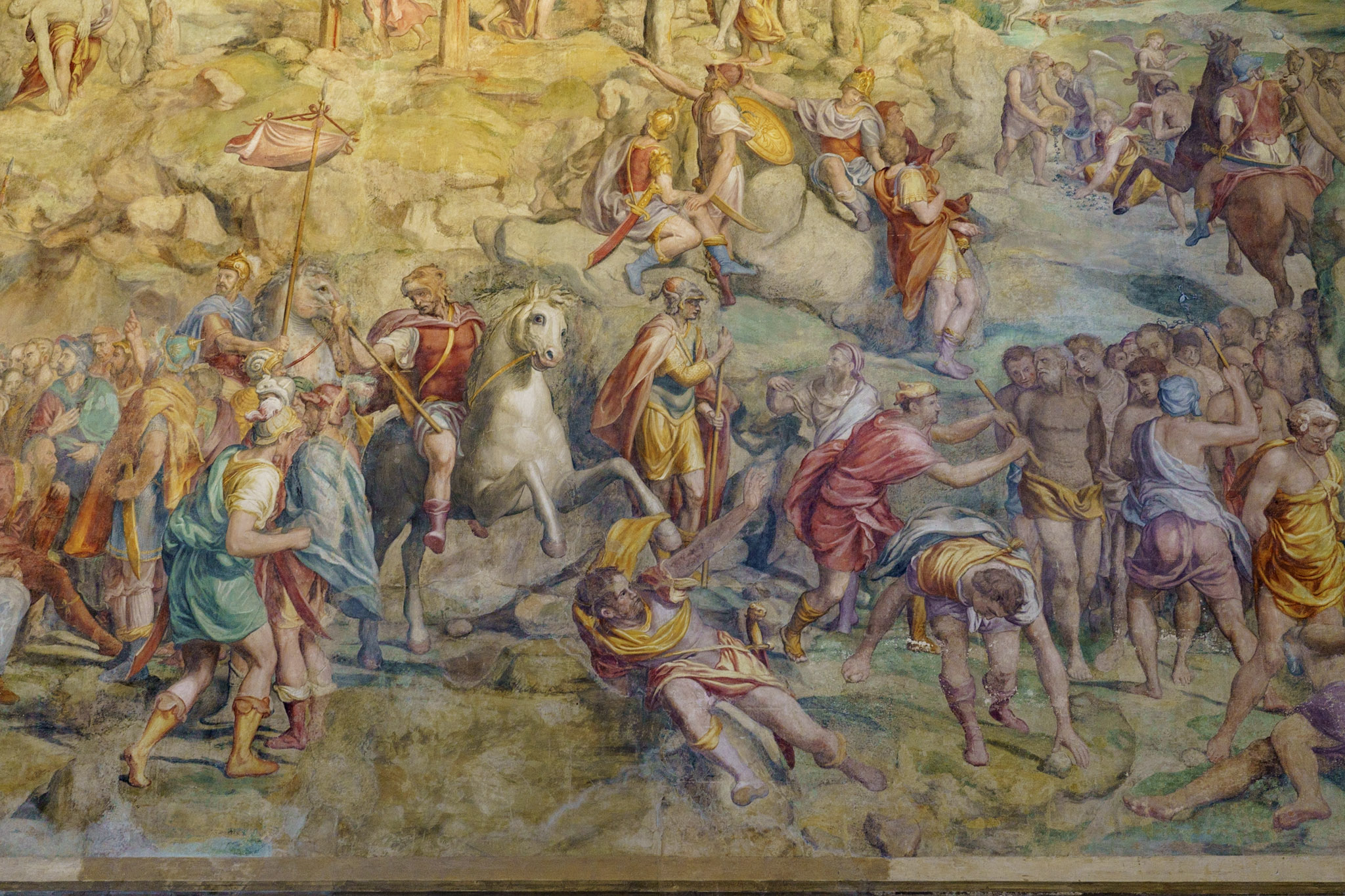
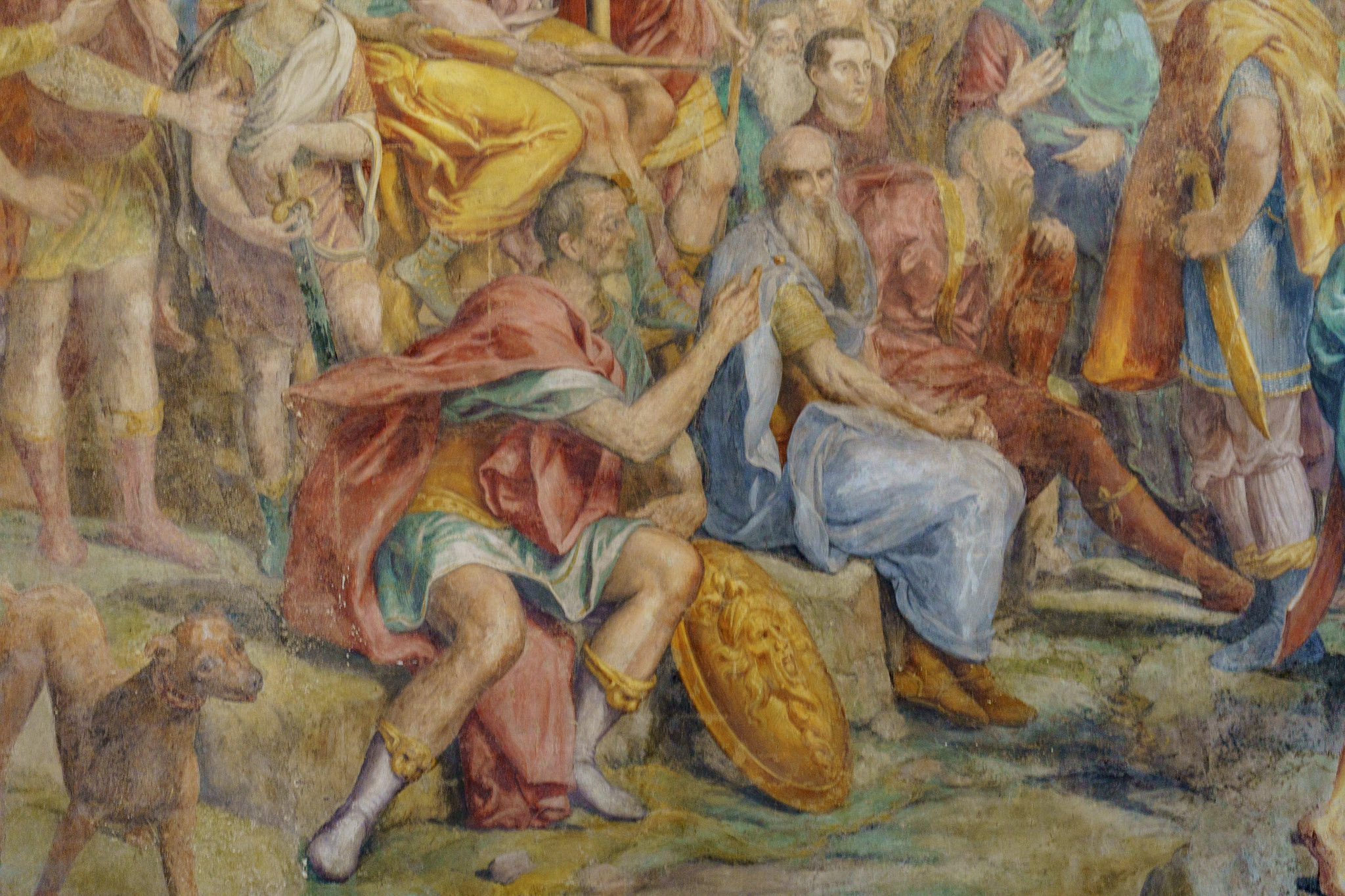
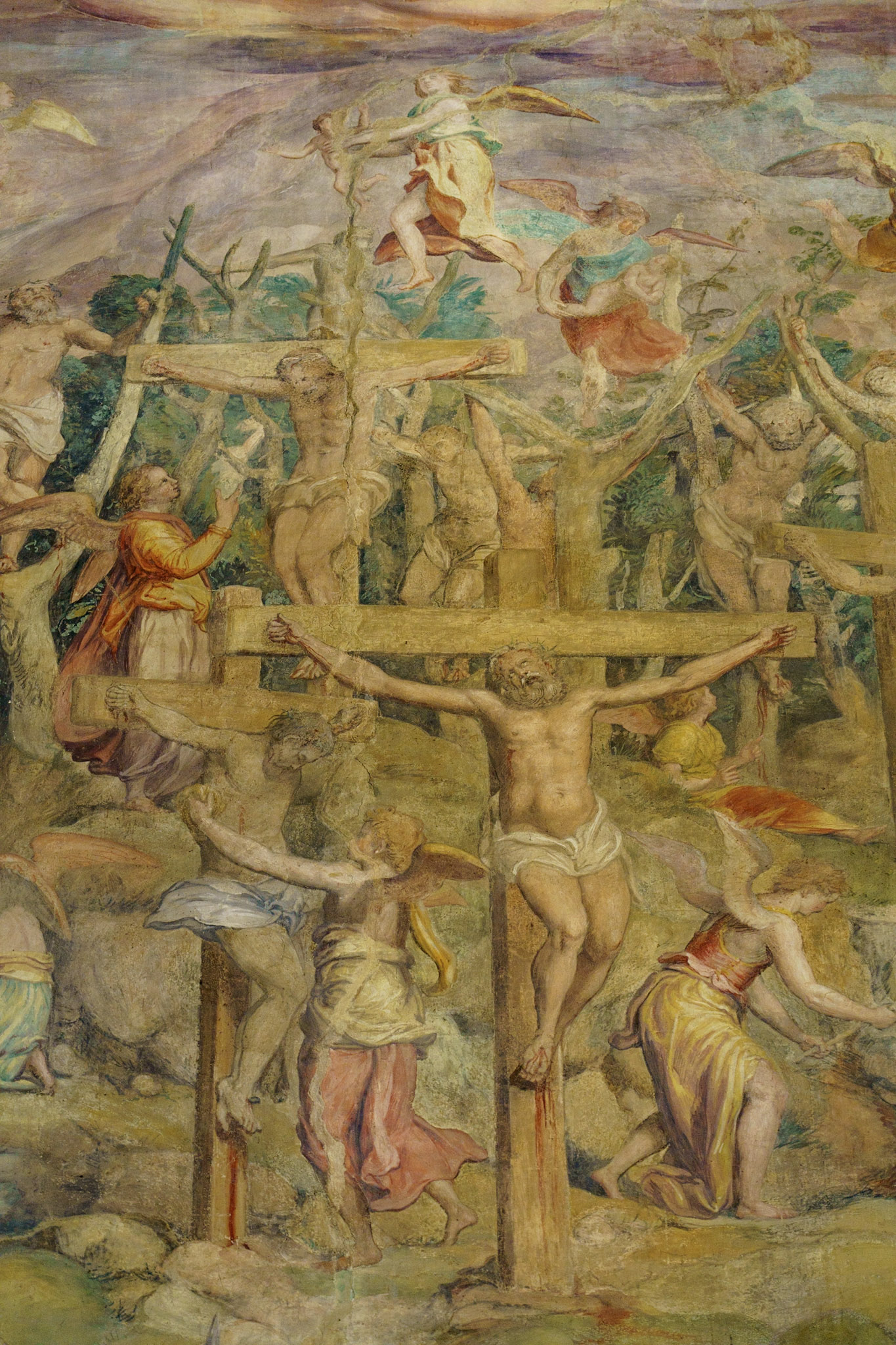
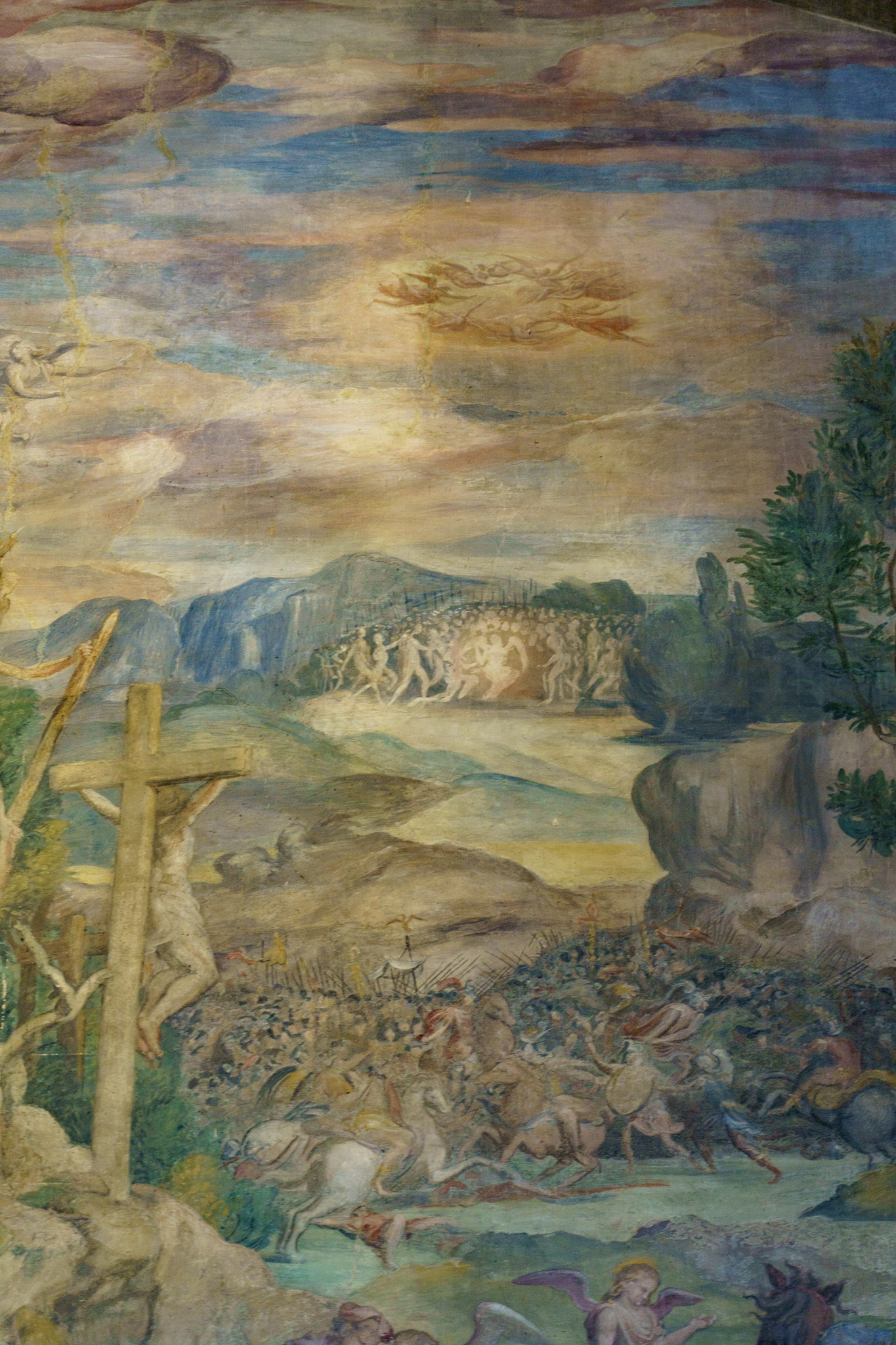
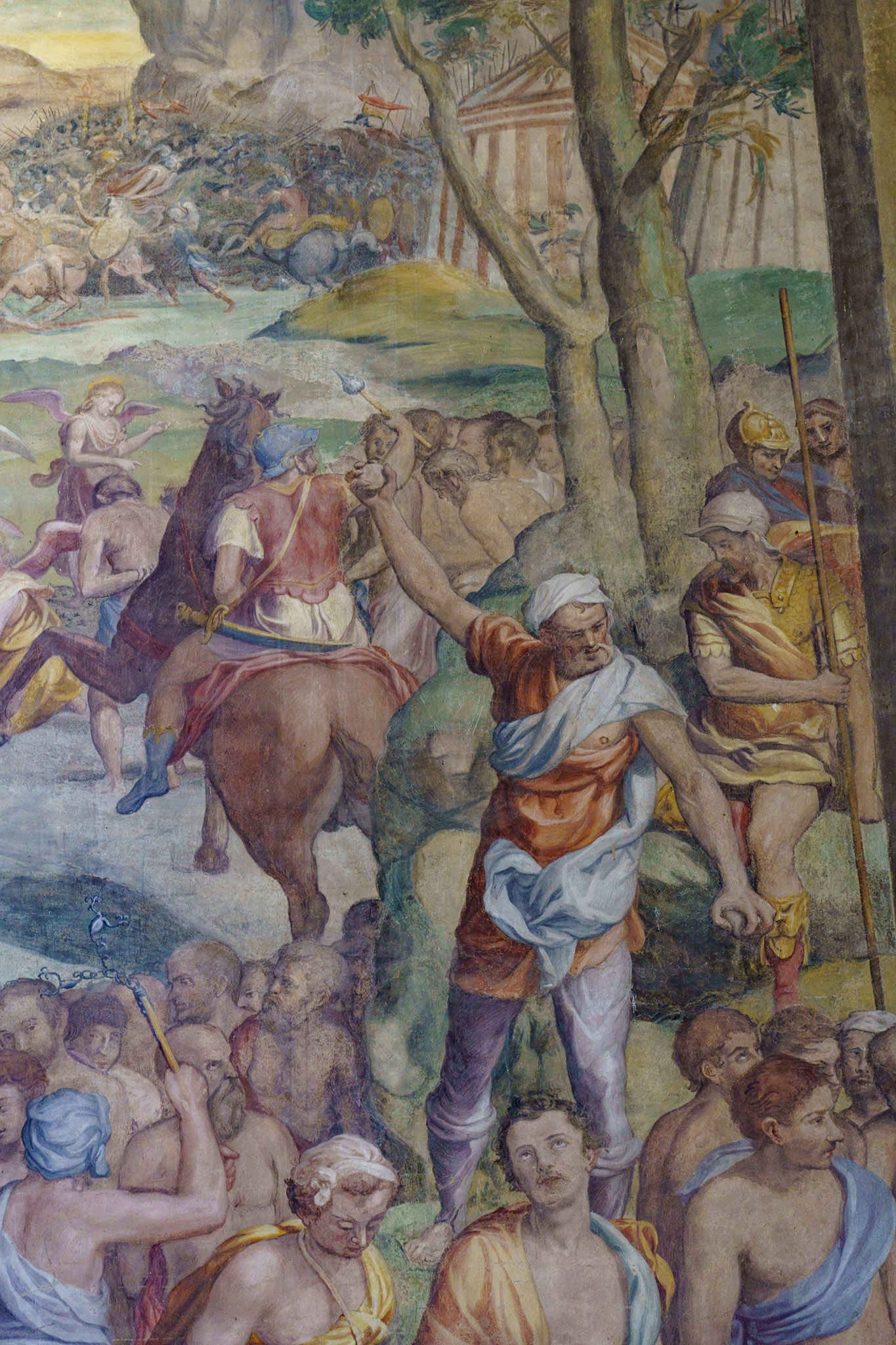
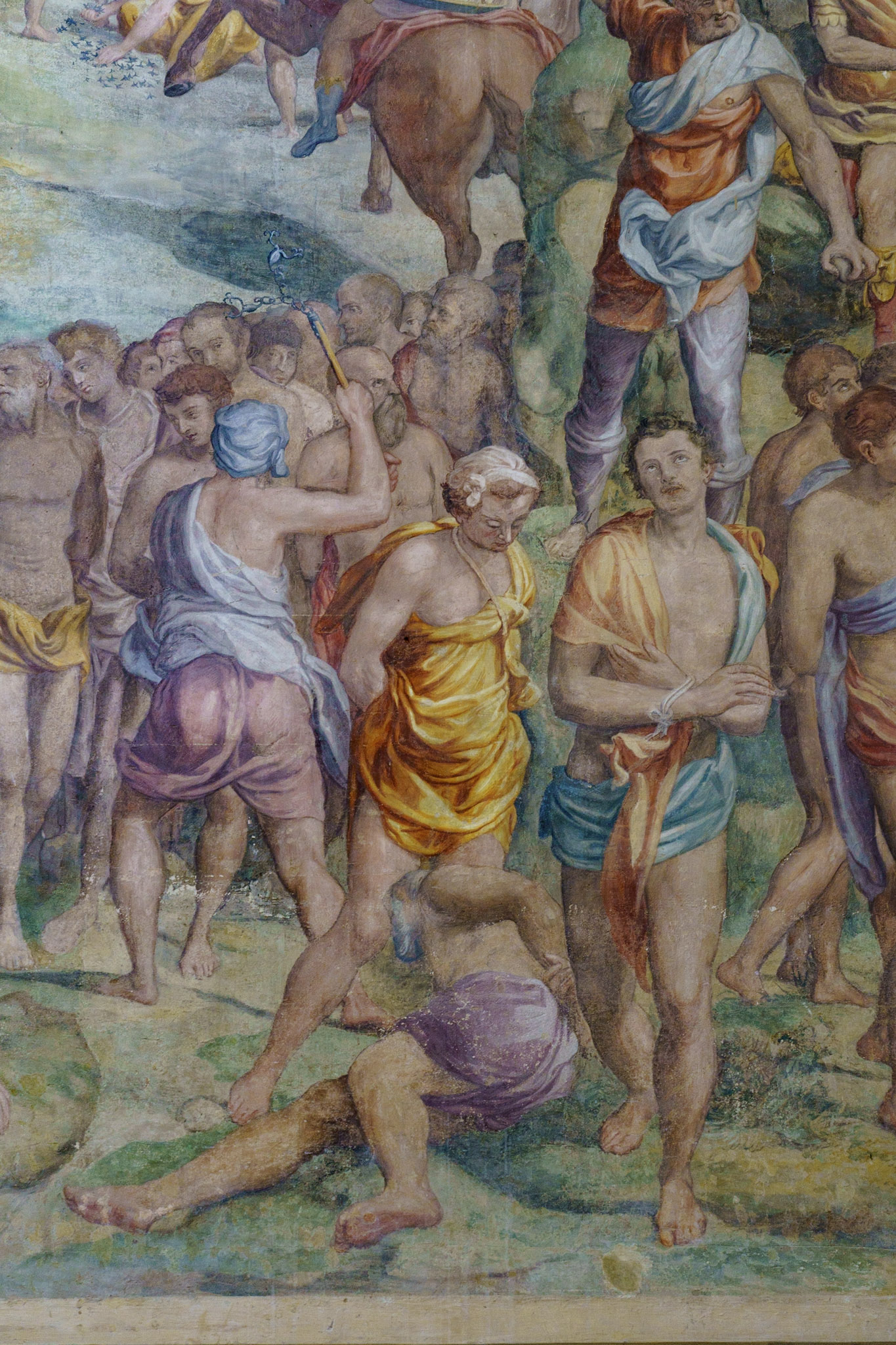
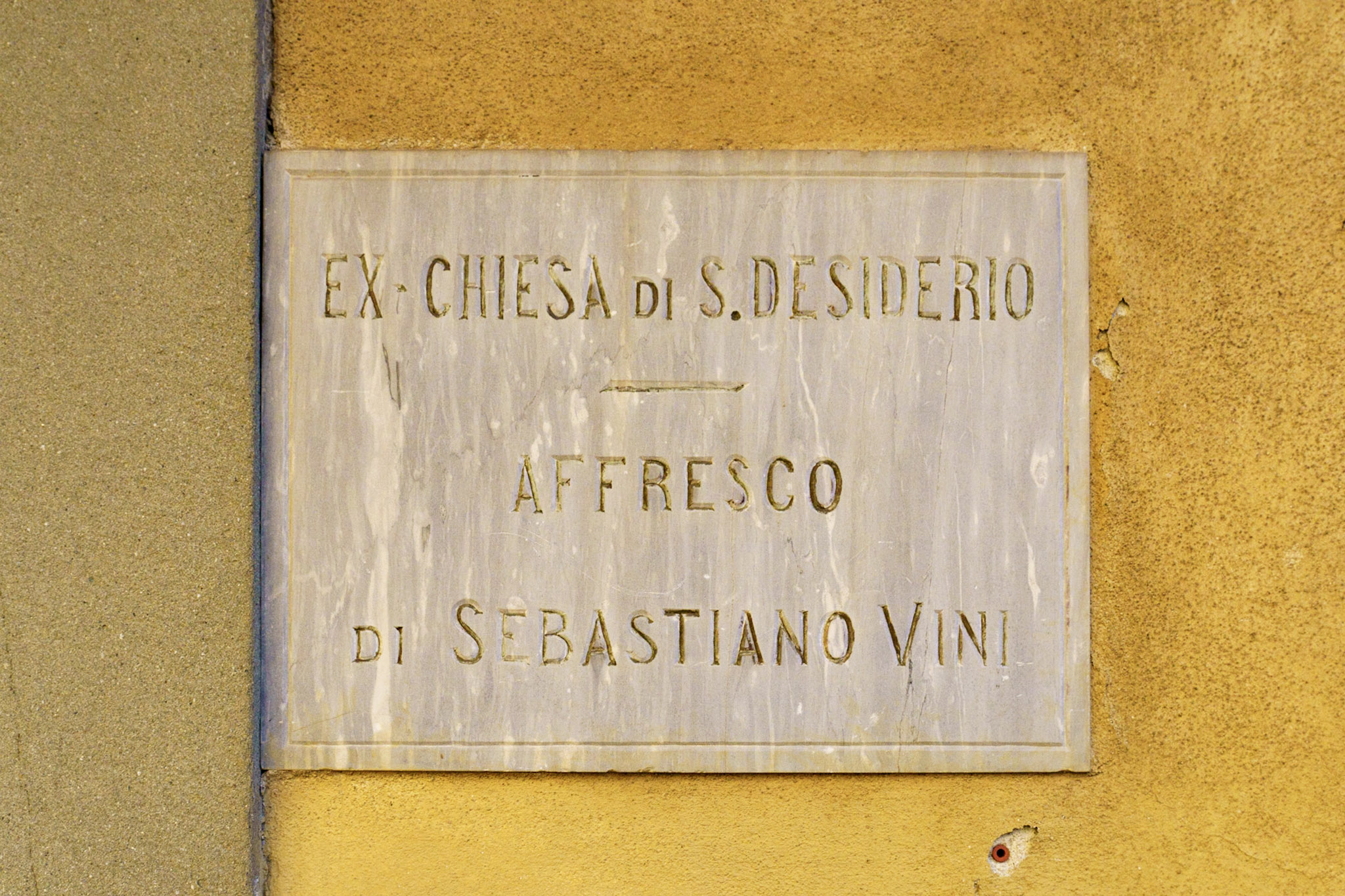
Before 1786, the hall had a lovely, inlaid wood choir, made in 1519 by Piero Mati. On its walls, you can see two frescos, depicting ‘Sant’Agnese’ – Saint Agnes – and ‘Maria Maddalena’ – Mary Magdalene – both attributed to the late 14th century Pistoia school. But this place is mostly known for the extremely beautiful fresco by Sebastiano Vini, often called “il Veronese”: the Crucifixion of San Desiderio and the ten thousand martyrs. The San Desiderio oratory belongs to Ministero della Cultura – Direzione regionale Musei nazionali della Toscana.